Pleasanton Market Update: Pricing Discipline Defines Late Summer 2026
Market Update

Market Update
Pleasanton is rewarding precision, not optimism.
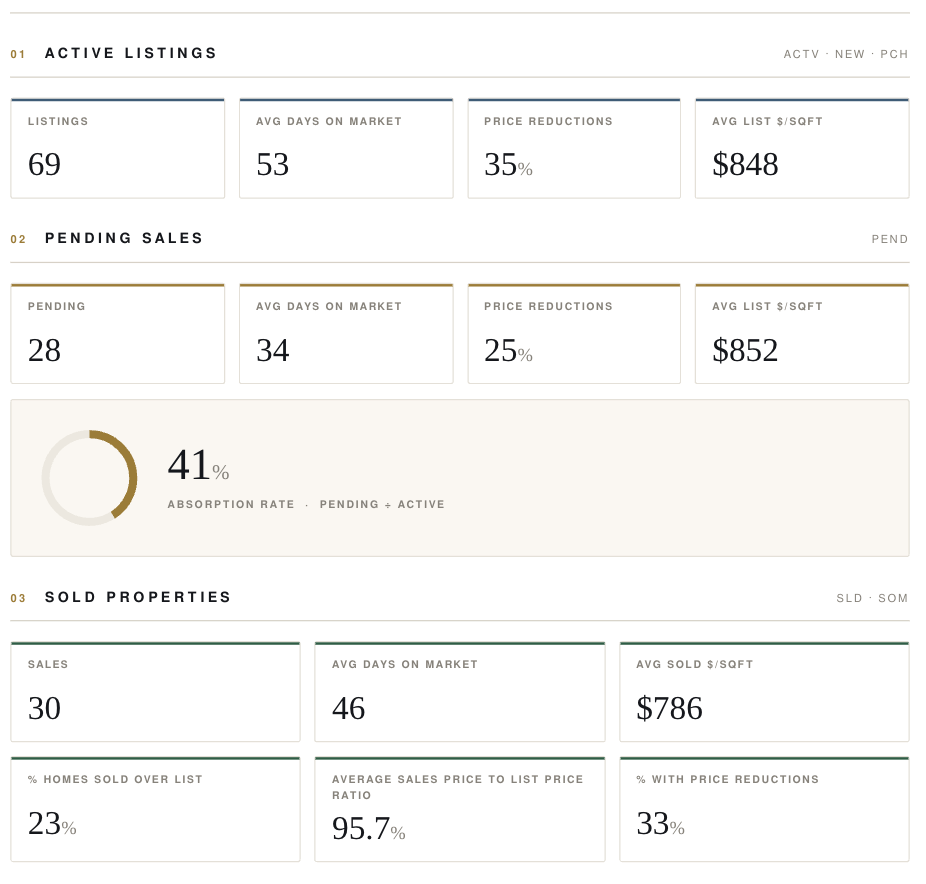
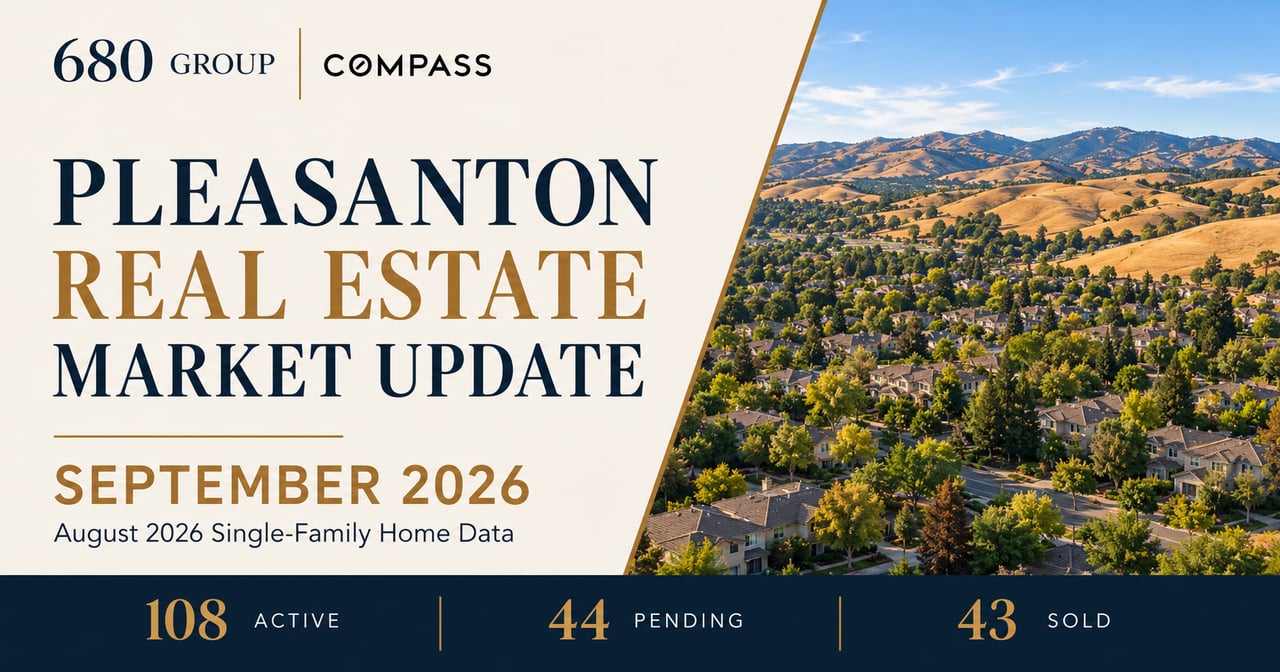
Pleasanton’s late-summer housing market is giving buyers more choices, but it is not giving every buyer the same leverage. The latest single-family-home snapshot shows 69 active listings, 28 pending sales, and 30 closed sales since July 15. That creates a 41% pending-to-active absorption rate—a market in which buyers can be selective, while sellers still have a strong opportunity if they launch at the right price.
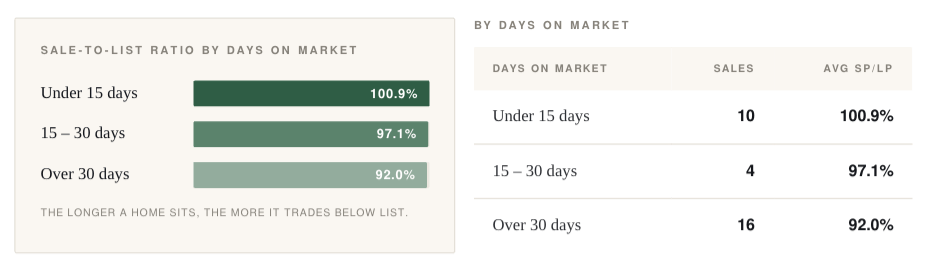
The dividing line is time on market. Homes that secured a buyer in under 15 days averaged 100.9% of their original list price. Homes that took more than 30 days averaged only 92.0%. In practical terms, the first two weeks remain a seller’s best window to capture urgency.
Source: MLS data compiled for The 680 Group. Snapshot prepared August 17, 2026; activity measured from July 15, 2026. Figures are averages unless otherwise noted.
Thirty Pleasanton single-family homes closed during the reporting period. Their average sale price was 95.7% of original list price, and only 23% sold above the seller’s initial asking price. That does not mean buyers have stopped competing. It means buyers are concentrating their attention on the homes they perceive as the best values.
The difference between a clean launch and a price correction was substantial. The 20 sold homes that never reduced their asking price averaged 98.5% of original list and took roughly 31 days to sell. The 10 homes that required a reduction averaged 90.0% of original list and took about 76 days. On a $1.6 million property, that percentage gap is approximately $136,000 before carrying costs are considered.
Seller takeaway: Price for the market you are entering, not the market you remember. A compelling launch price, strong presentation, and concentrated first-week marketing can protect both your negotiating position and your timeline.
With 69 active listings against 28 pendings, buyers have more room to compare homes and negotiate than they would in a highly compressed market. The opportunity is especially visible among older listings: 22 active homes had been on the market for more than 60 days, 12 had passed 90 days, and 35% of all active listings had already reduced their price.
Still, leverage is property-specific. A listing that has been sitting since spring—especially one that has already reduced—deserves a different offer strategy from a well-prepared home that came on the market last week. Ten of the 30 closed sales went pending within 15 days and, as a group, sold above original asking.
Buyer takeaway: Negotiate firmly where time on market supports it, but move decisively when a fresh listing is correctly priced. A market with more inventory is not the same as a market without competition.
Pleasanton’s market is also behaving differently by price band. Below $1.5 million, the snapshot recorded 21 active listings and 13 pending homes—the fastest-moving portion of the market. Yet closed sales in that range averaged 92.5% of original list price, suggesting that speed and seller pricing expectations are not always aligned.
Between $1.5 million and $2 million, buyers had 34 active listings competing with only eight pendings. That inventory-to-pending imbalance can create more negotiating room, particularly for properties with extended market time or prior price reductions. Above $1.5 million overall, closed sales averaged 97.5% of original list price, reinforcing the need to evaluate each segment separately rather than rely on a citywide average.
Sellers: Build the pricing strategy around the first 14 days, and support it with professional preparation, presentation, and launch marketing.
Buyers: Use days on market, pricing history, comparable sales, and the specific price band to determine how aggressively to negotiate.
Both sides: Treat price per square foot as context, not a conclusion. Lot, location, condition, upgrades, floor plan, and luxury-listing mix can materially change the comparison.
Is Pleasanton a buyer’s market in late summer 2026?
Buyers have more selection and meaningful leverage on some older or reduced listings. However, correctly priced homes can still sell quickly and above asking, so the market is better described as selective and segmented than uniformly buyer-favored.
Are Pleasanton home prices falling?
This snapshot does not measure year-over-year or month-over-month price appreciation. It does show that closed homes averaged 95.7% of original list price and that longer market times were associated with deeper discounts.
When is the best time to reduce a listing price?
The data argues for avoiding an initial overpricing problem. If buyer activity and feedback are weak during the first two weeks, the response should be prompt and evidence-based, because homes taking more than 30 days averaged materially lower sale-to-list ratios in this sample.
How much can a buyer negotiate on a Pleasanton home?
There is no reliable citywide discount to apply to every listing. The strongest indicators are days on market, prior reductions, comparable sales, property condition, competition, and the supply-demand balance within the home’s price range.
The Pleasanton market is creating opportunities for both sides, but only when the strategy matches the property. Sellers need an honest launch price and a plan designed to generate early attention. Buyers need to distinguish between a listing that is vulnerable and one that is likely to attract immediate competition.
If you are considering a move, the useful question is not simply whether the market is “up” or “down.” It is how your home—or the home you want—fits into today’s inventory, price band, condition, and buyer demand.
Thinking about buying or selling in Pleasanton?
Contact Doug Buenz and The 680 Doug Buenz Group at Compass for a property-specific pricing analysis, neighborhood context, and a strategy built around the current market—not a citywide average.
680homes.com | (925) 621-0680 | 900 Main Street, Suite 101, Pleasanton, CA 94566
Stay up to date on the latest real estate trends.
Tri-Valley real estate
Doug Buenz | October 21, 2026
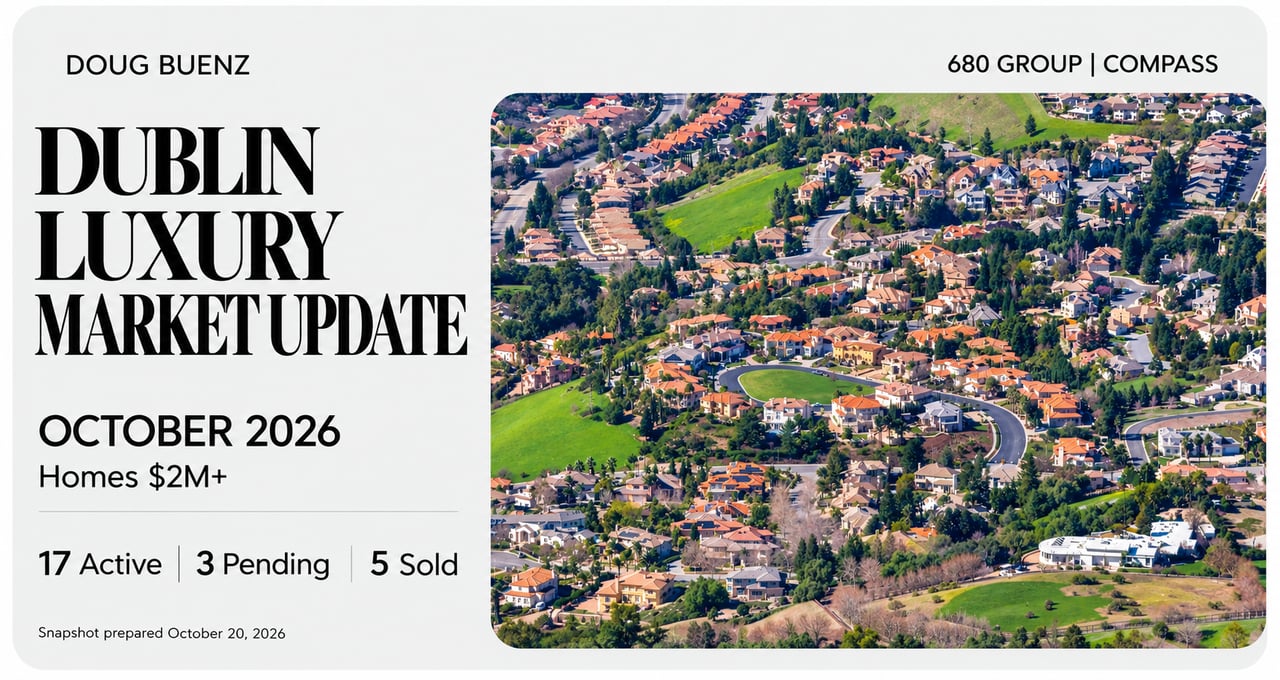
Seventeen active listings and five closings highlight the importance of property specific pricing
Market Update
Doug Buenz | October 16, 2026
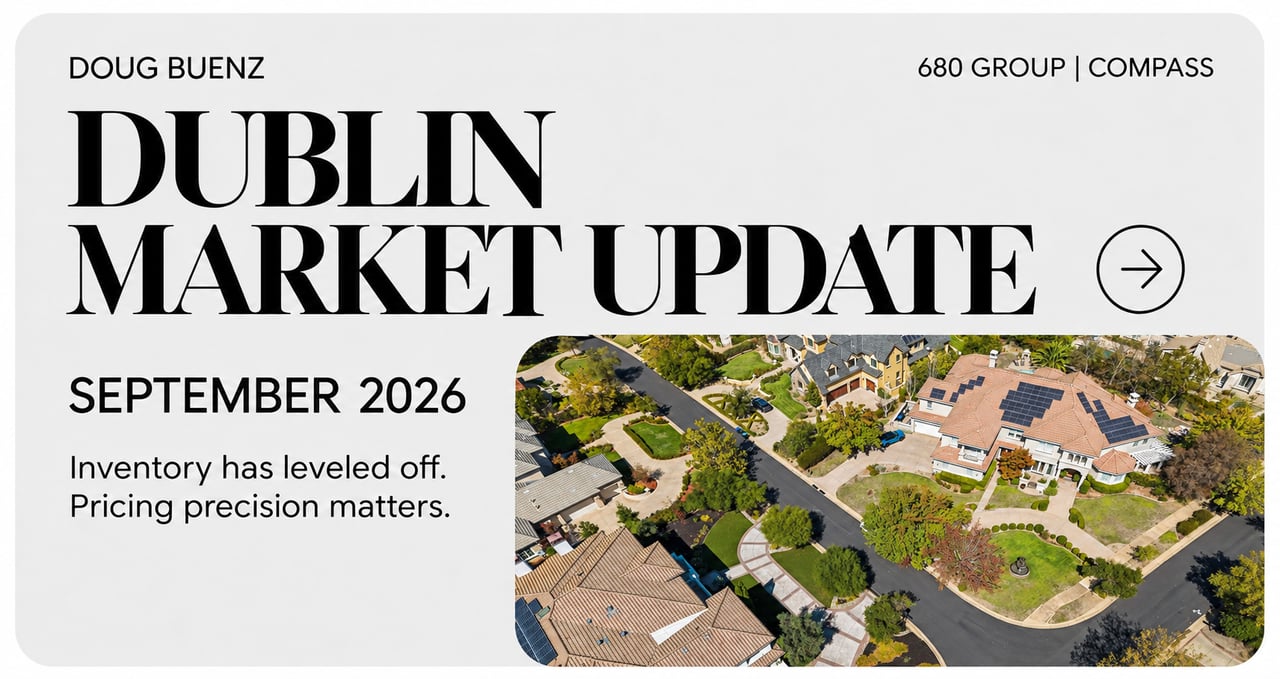
Inventory has leveled off, buyer activity has slowed, and accurate pricing is becoming increasingly important.
Market Update
Doug Buenz | October 12, 2026
Inventory has leveled off, buyer activity has slowed, and strategic pricing continues to shape results.

Market Update
Doug Buenz | October 9, 2026
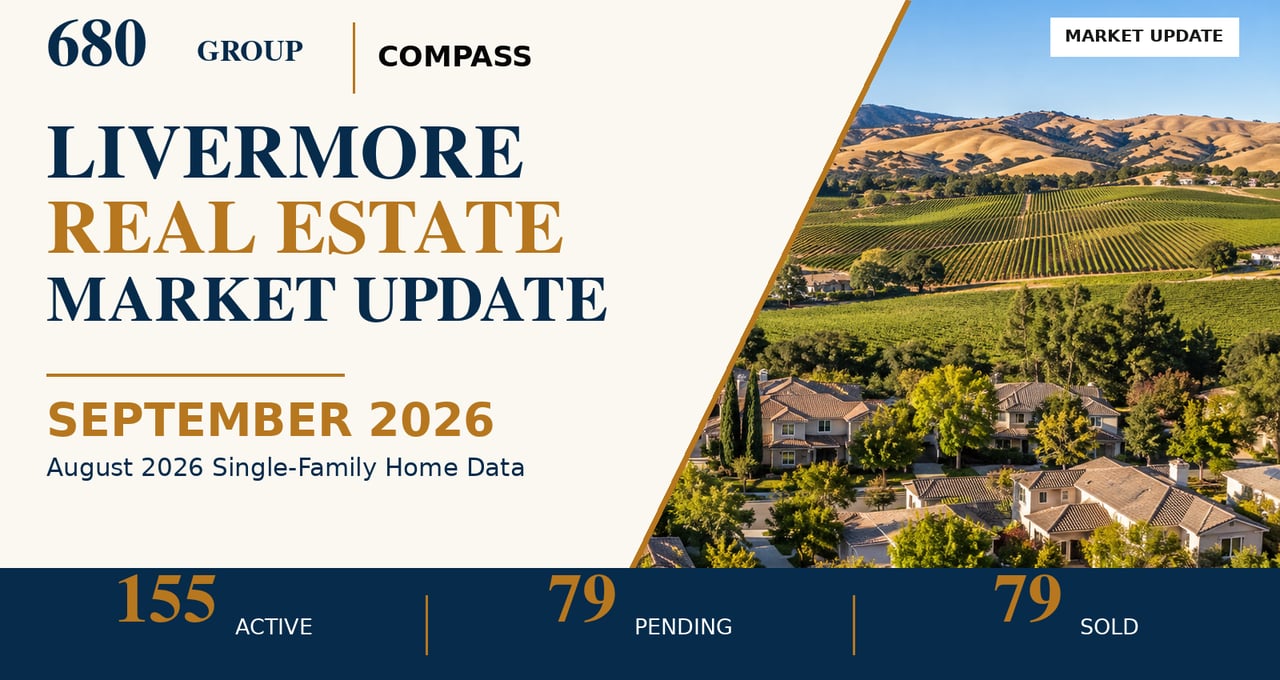
Well-priced homes are selling quickly, while longer market times give buyers more negotiating room.
Market Update
Doug Buenz | September 21, 2026
Inventory remains elevated, absorption stays below 40%, and Dublin buyers are separating well-positioned homes from listings that miss the market.
Market Update
Doug Buenz | September 19, 2026
Pricing Precision Shapes the Early Fall Market
Market Update
Doug Buenz | September 15, 2026
August 2026 single-family home data for Pleasanton, California, published September 2026

Doug Buenz | August 20, 2026
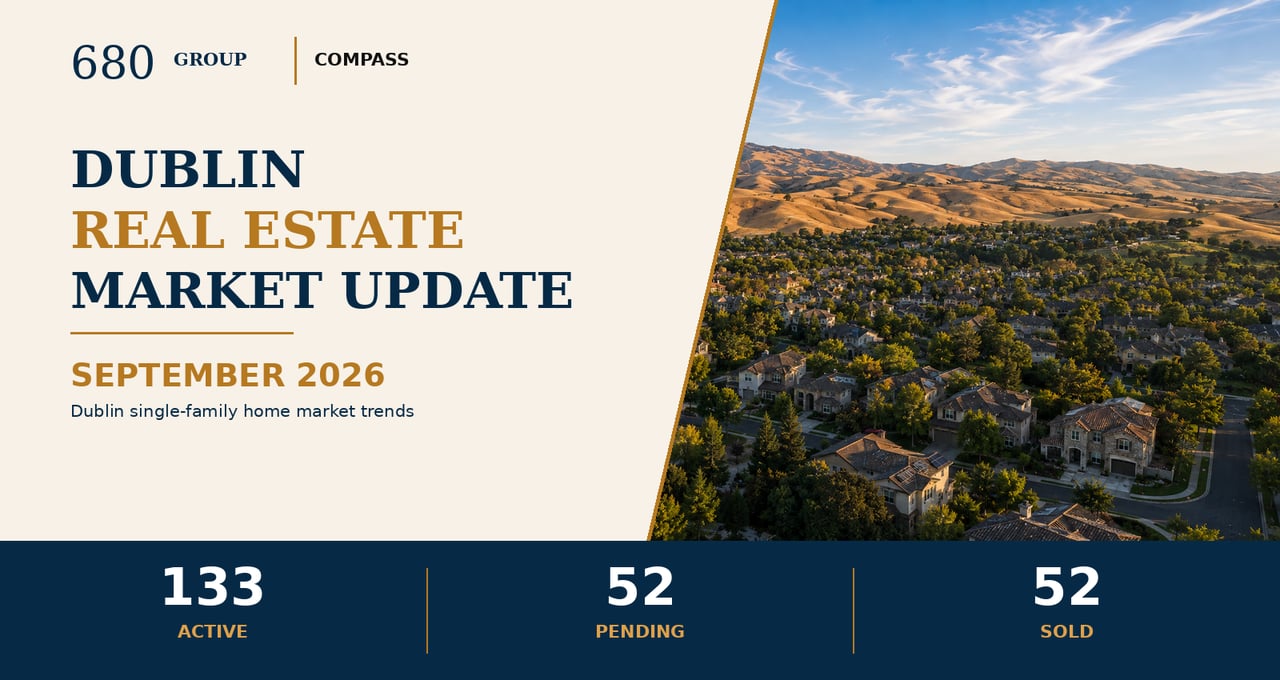
Dublin’s latest single-family home trends, including inventory, buyer demand, pricing, and days on market from July 15 through August 17, 2026.
Market Update
Doug Buenz | August 18, 2026
Pleasanton buyers have more choices, but well-priced homes can still sell at or above asking. Here’s what the latest single-family-home data means.